

2 min read
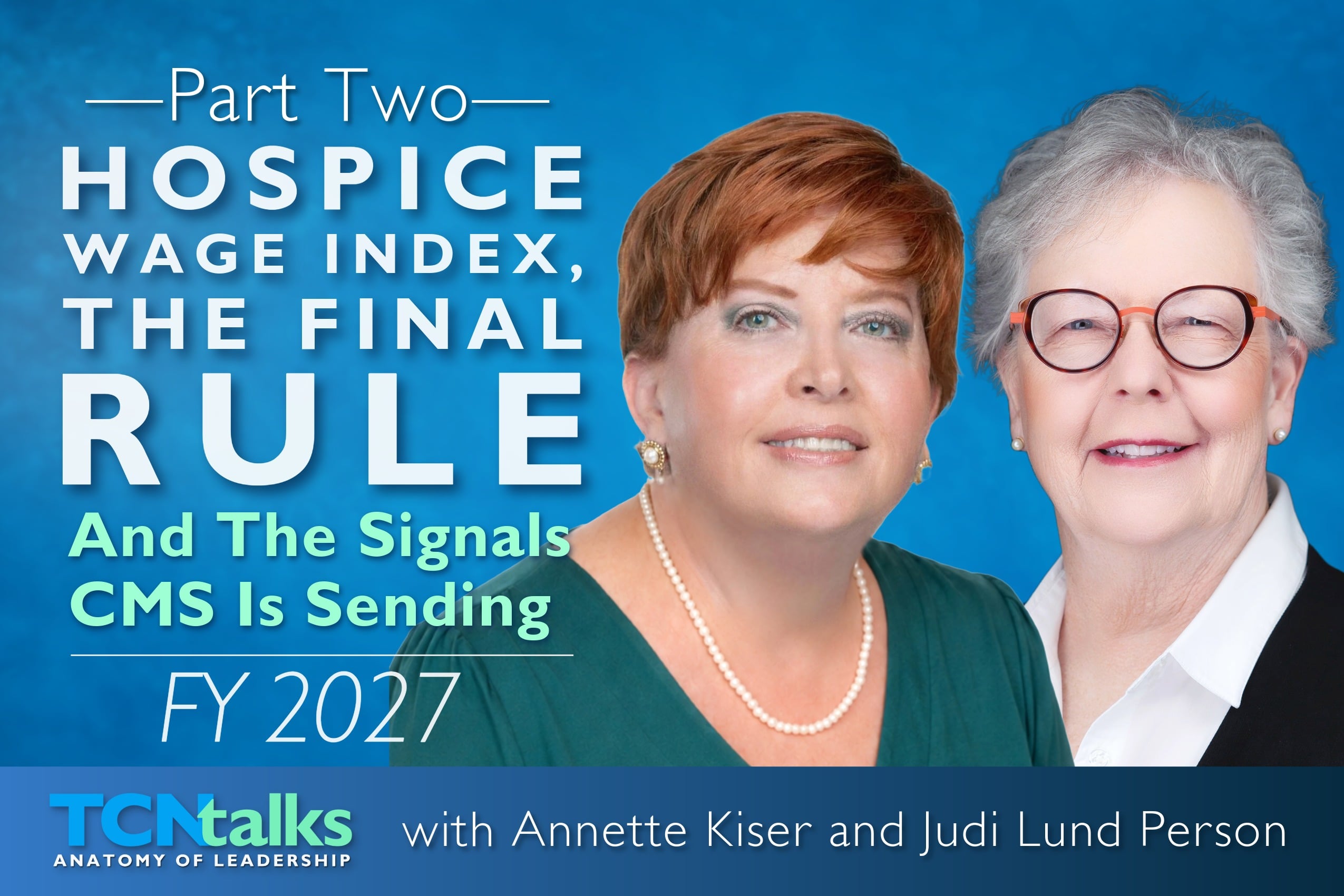
Centers for Medicare & Medicaid Services (CMS) isn’t just changing the rules—it’s signaling where hospice is headed next, and leaders who learn to read those signals will be better prepared for what’s coming.
In Part Two of this timely conversation, Chris Comeaux continues his discussion with hospice experts Annette Kiser and Judi Lund Person, examining what the latest Hospice Wage Index and Final Rule reveal about CMS’s evolving expectations. Increased oversight, public data, non-hospice spending, utilization patterns, and the mandatory addendum are putting greater pressure on providers to understand their numbers and build systems that reach well beyond the compliance department. As Kiser emphasizes, organizations that think systemically—across clinical, quality, compliance, finance, and operations—will be better positioned than those that simply react when a new requirement arrives.
The conversation also looks beyond today's regulations toward the future of the Medicare hospice benefit. Kiser and Lund Person explore CMS's growing emphasis on documentation, outcomes, cost-report accuracy, fraud, waste and abuse, and data-driven oversight—and what those trends could eventually mean for payment reform and value-based care. Their message to hospice leaders is clear: know your numbers, understand your trends, strengthen your documentation, and start preparing before CMS makes the next change mandatory.
At the center of it all is something larger than compliance: patients and families. The data should ultimately help hospices ask whether they are delivering the care people need, while leaders build relationships, embrace thoughtful innovation, and ensure hospice has a meaningful voice in shaping its future.
Key Takeaways
- CMS oversight is becoming increasingly data-driven. Hospice leaders need to understand their Service and Spending Variation Index (SSVI), Program for Evaluating Payment Patterns Electronic Report (PEPPER), utilization, non-hospice spending, and organizational trends before an auditor or regulator identifies them.
- The mandatory addendum raises the stakes for documentation. Decisions regarding unrelatedness should be physician-driven and clearly documented, with the addendum becoming a significant condition-of-payment issue.
- Cost reports could help shape future hospice payment reform. Accurate, clean, auditable cost reporting will become increasingly important as CMS evaluates the true costs associated with hospice care and potentially different patient populations and services.
- Hospice may be moving toward greater accountability for outcomes and value. CMS's expanding quality-data infrastructure and interest in outcome measures could eventually influence how providers are evaluated—and potentially paid.
- Future-ready organizations will build systems rather than silos. Successful leaders will bring clinical, compliance, quality, finance, administration, and operational teams together while using innovation and AI thoughtfully to improve care and organizational performance.
Don’t wait for the next regulation to tell you where hospice is going. Listen to Part Two and challenge your leadership team to look beyond compliance: know your data, strengthen your systems, build the right relationships, and prepare now for the hospice environment you’ll be leading three to five years from today. Then subscribe to TCNtalks and Anatomy of Leadership so you don't miss the conversations helping healthcare leaders anticipate change rather than simply react to it.
Special Guest:

Annette Kiser
Chief Compliance Officer with Teleios

Our Host

Chris Comeaux
MLAS, CPA
President / CEO of Teleios
Order Book On Amazon
The Anatomy Of Leadership