

9 min read
By Chris Comeaux
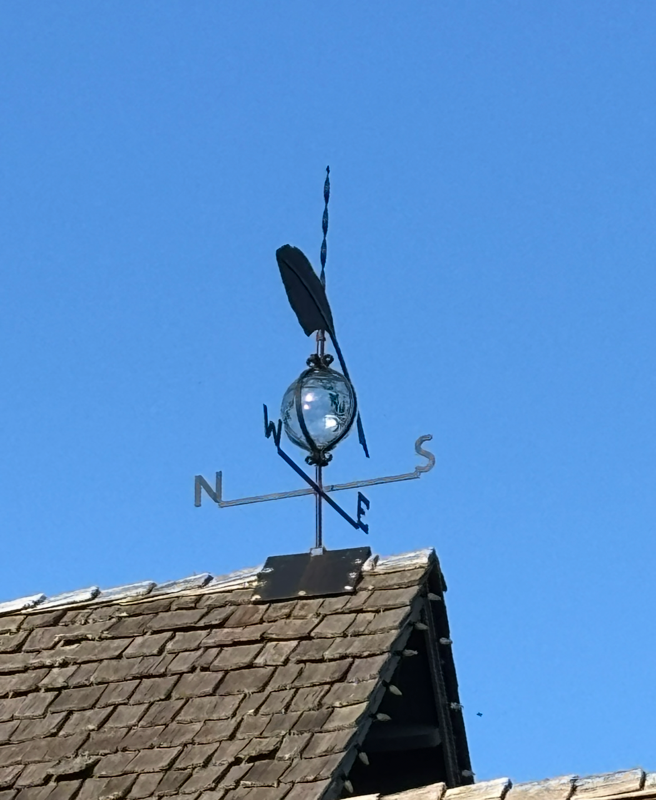
Walk through almost any historic town square or countryside estate and you’ll find them perched quietly above it all—weather vanes. Elegant, often ornate, sometimes whimsical. Roosters, arrows, horses, ships. They add character. They signal tradition. They are, in many ways, aesthetically pleasing.
But functionally, they do one thing: they point in the direction the wind is already blowing.
That’s their value—and their limitation.
The Subtle Trap of Following the Wind
There are people who operate much like a weather vane. They are highly attuned to their environment. They can read a room with precision. They sense shifts in sentiment before others do. They understand where the momentum is heading and instinctively align themselves with it.
This is not without merit.
In fact, organizations need people like this. They are often the earliest indicators of cultural change. They reflect the mood of a team, the concerns of a workforce, the energy of a market. As a leader, having access to individuals who can effectively “take the pulse” is invaluable.
But there is a critical distinction that must be made.
Reading the room is not the same as leading it.
The Difference Between Awareness and Direction
Weather vanes do not influence the wind—they respond to it.
Leaders, by contrast, are defined by their willingness to challenge the prevailing direction. Leadership is not passive alignment; it is active trajectory-setting. It requires conviction strong enough to stand against momentum when necessary.
If you are constantly adjusting yourself to match the direction of the crowd, you may be well-liked. You may even be perceived as insightful. But over time, something more important erodes: your ability to shape outcomes.
Because leadership, at its core, is about changing where things are headed—not simply acknowledging where they are going.
The Hidden Cost of Being a Weather Vane
Operating as a weather vane can feel safe. It minimizes conflict. It reduces the risk of being wrong. After all, if you are aligned with the majority, you are rarely isolated.
But it also carries a cost.
You become reactive instead of proactive. You trade influence for acceptance. You gain short-term harmony at the expense of long-term progress.
And perhaps most importantly, you limit the possibility of transformation—because transformation almost always requires someone willing to disrupt the current direction.
When Being a Weather Vane Is Useful
To be clear, the skill set of a “weather vane” is not something to discard. The ability to read context, understand sentiment, and sense shifts in direction is essential for effective leadership.
Great leaders are not blind to the wind—they study it.
They use it as data, not direction.
They ask:
- What is driving this momentum?
- Is this direction sustainable?
- Does this align with where we should be going?
- Are you a weather vane—accurate, responsive, aligned with the moment?
- Or are you a leader—someone willing to step into the wind and change its direction?
Then—and this is the critical move—they decide whether to harness the wind, redirect it, or stand firmly against it.
Leadership Requires a Willingness to Be Unreasonable
At some point, every leader faces a defining choice: to follow the wind or to challenge it.
Progress rarely comes from those who simply align themselves with existing forces. It comes from those willing to question them, reshape them, and, when necessary, oppose them.
George Bernard Shaw captured this tension perfectly:
“The reasonable man adapts himself to the world: the unreasonable one persists in trying to adapt the world to himself. Therefore, all progress depends on the unreasonable man.”
So, Which Are You?
The answer is not found in how well you read the room.
It is found in whether you are willing to change it.
Chris Comeaux,
MLAS, CPA
President / CEO TCN / TCG


Leadership Immersion
Register Now
Teleios University (TU)
Discover More
Register Today!



An organizational model that allows nonprofit hospices (Members) to
leverage best practices, achieve economies of scale and collaborate
in ways that better prepare each agency to participate
in emerging alternative payment models and advance
their charitable missions.
Related Posts
5 Reasons to Gift Yourself an Executive Coach
Executive leadership coaching is distinct from subject matter specialty and organizational...
The Speed of TCN
Years ago, I had a PowerPoint slide that had these cool dials on it and the animation would make...
Leadership with Grit, Grace, and a Bold Heart
By Lynn Flanagan and Tina GentryLeadership is not for the faint of heart! It demands adaptability, ...