
1 min read
Who should control the healthcare dollar—and what happens when the organization paying for care also decides how it is delivered?
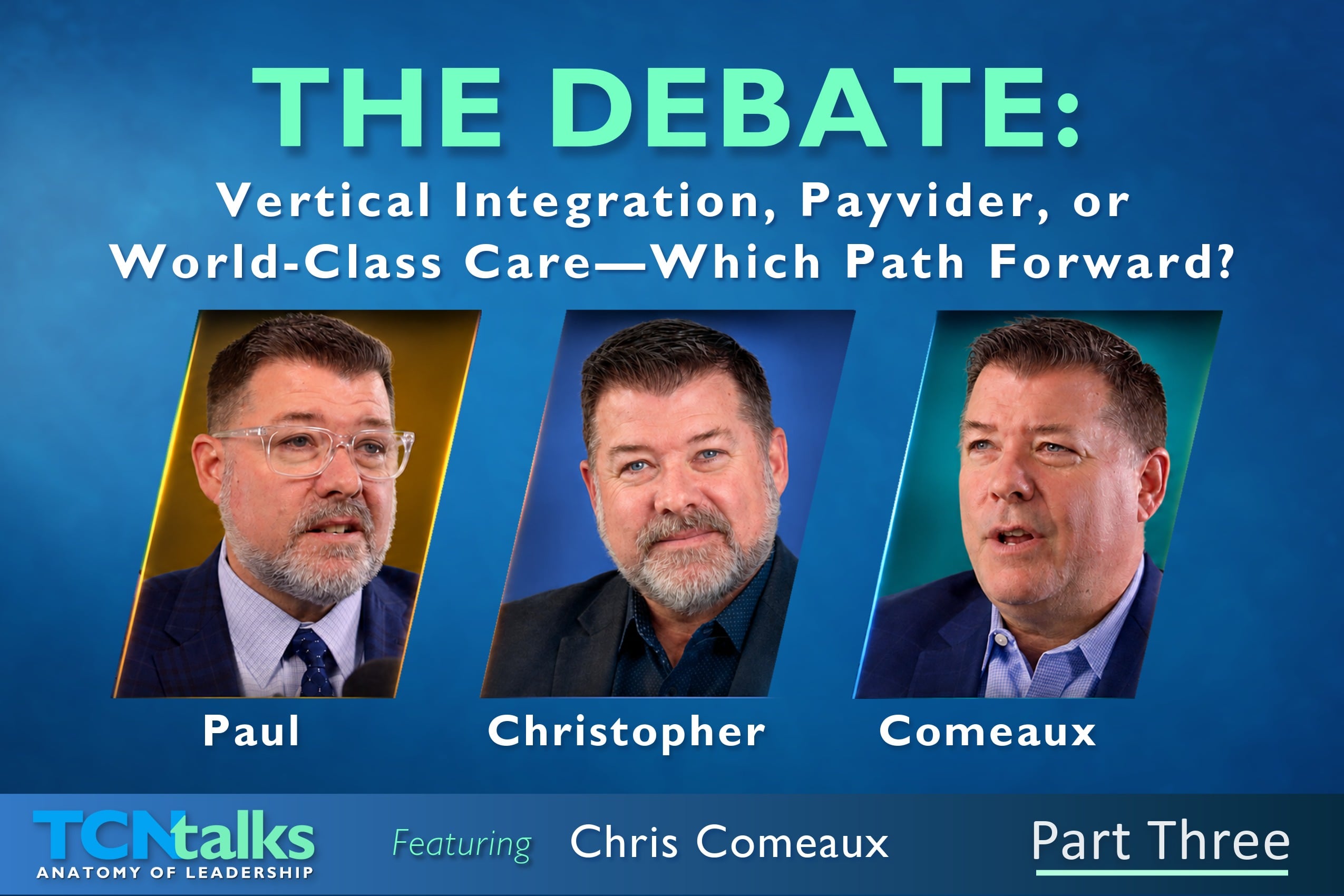
In Part Three of The Debate: Vertical Integration, Payvider or World-Class Care—Which Path Forward?, Chris Comeaux examines the payvider model and its implications for hospice, palliative care, and the future of serious illness care. "Christopher" makes the case that clinical excellence alone may leave providers without the influence they need to shape access, fund prevention, and support patients earlier.
The promise is compelling: align financing with care delivery so organizations can invest in home-based services, interdisciplinary teams, and caregiver support before a crisis occurs. But Chris challenges the assumptions behind that promise. Can providers manage financial risk and operational complexity? Will integrated networks preserve patient choice? And how do leaders prevent the pursuit of lower costs from overshadowing quality of life?
For healthcare leaders, nonprofit executives, hospice professionals, and business leaders, this conversation puts mission at the center of strategy. "Christopher" uses the example of a common patient's care experience to highlight what responsible alignment requires: independent clinical governance, transparent outcomes, and accountability for the experience of patients and families.
Five key takeaways
- Financing shapes the patient’s path. Payment, attribution, data, and network decisions influence care long before a hospice referral.
- Aligned payment can support earlier intervention. Accountable care arrangements may fund prevention, coordination, and caregiver support that fee-for-service payment struggles to sustain.
- Becoming a payvider requires distinct capabilities. Care delivery expertise does not automatically translate into the capital, infrastructure, and skills needed to manage insurance risk.
- Patient choice must survive integration. A coordinated care experience needs safeguards against restrictive networks and financially driven care decisions.
- Mission protection requires measurable oversight. Independent clinical governance, board accountability, and transparent quality-of-life measures help keep patients at the center.
Watch / Listen to Part Three, then bring one question to your leadership team: Does our financial strategy strengthen the care our mission promises? Follow TCNtalks / Anatomy of Leadership and continue the debate in Part Four.
Our Host

Chris Comeaux
MLAS, CPA
President / CEO of Teleios
Order Book On Amazon
The Anatomy Of Leadership