

The Debate: Vertical Integration, Payvider, or World-Class Care—Which Path Forward? | Part Four
What happens when three compelling visions for healthcare’s future face off—and one host has to defend them all?
1 min read
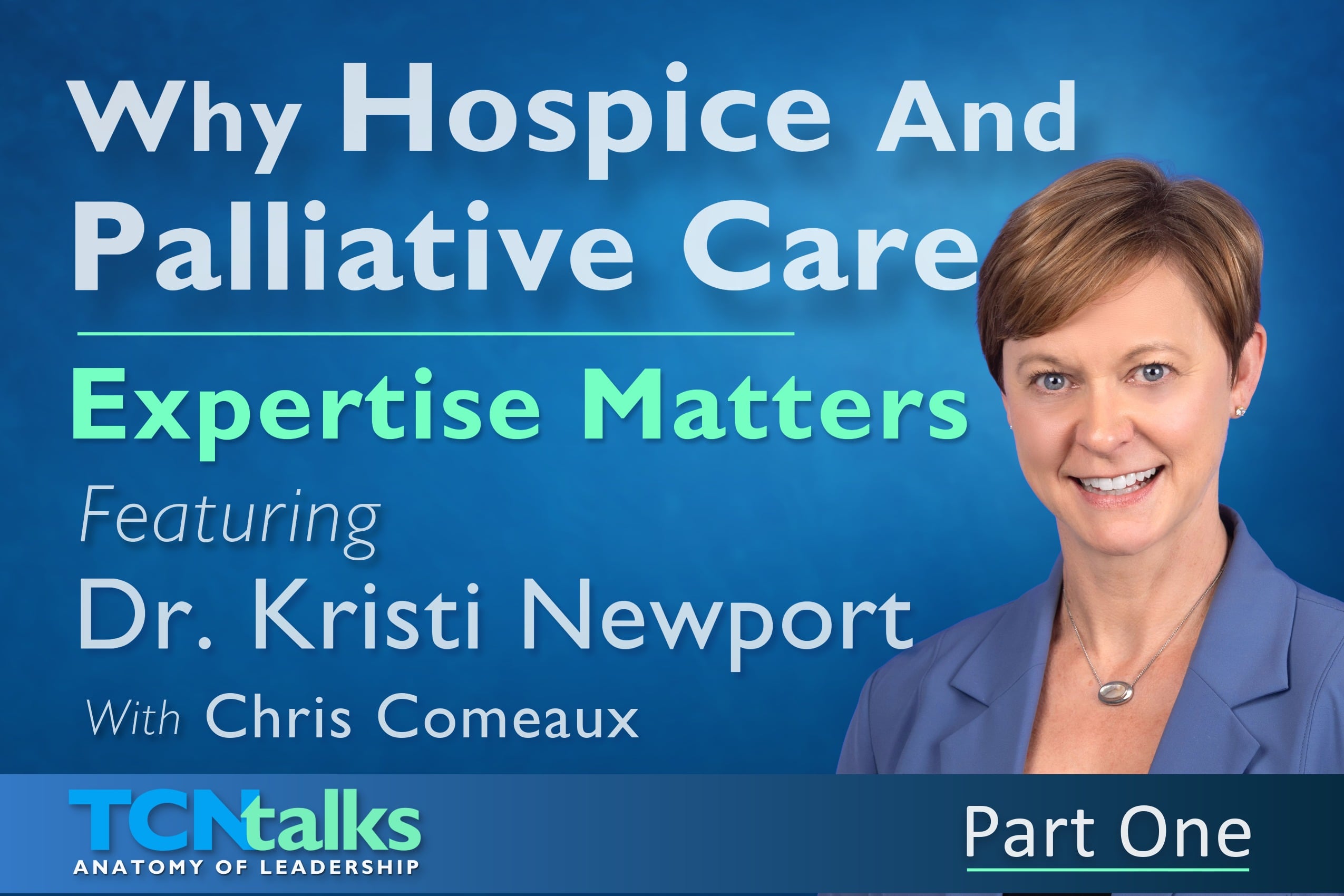
When patients and families are facing serious illness, compassion matters—and so does the expertise behind every clinical decision.
In Part One of this TCNtalks / Anatomy of Leadership conversation, host Chris Comeaux welcomes Dr. Kristi Newport, chief medical officer of the American Academy of Hospice and Palliative Medicine (AAHPM) and Chief of Palliative Care at Penn State College of Medicine, to explore what makes hospice and palliative medicine a distinct medical specialty.
Dr. Newport connects rigorous training and ongoing learning with the deeply human work of understanding what matters most to patients. From prognostication and complex symptom management to communication, ethics, and interdisciplinary collaboration, she explains why effective care requires both clinical competence and meaningful relationships.
Her example of deprescribing reveals how a seemingly straightforward medication decision can carry profound implications for patient trust. For healthcare leaders, nonprofit executives, and hospice professionals, this conversation offers a compelling leadership challenge: ensure your organization has the expertise to deliver the care it promises.
5 Key Takeaways
Does your organization have the expertise to deliver the care it promises? Share it with your leadership and clinical teams, and use the conversation to examine how you support specialized training, interdisciplinary collaboration, and patient trust. Subscribe to TCNtalks / Anatomy of Leadership so you don’t miss Part Two coming Friday.

Chief Medical Officer for American Academy of Hospice
and Palliative Medicine, and Chief of Palliative Care
for Penn State University College of Medicine in Hershey, PA
Our Host

MLAS, CPA
President / CEO of Teleios


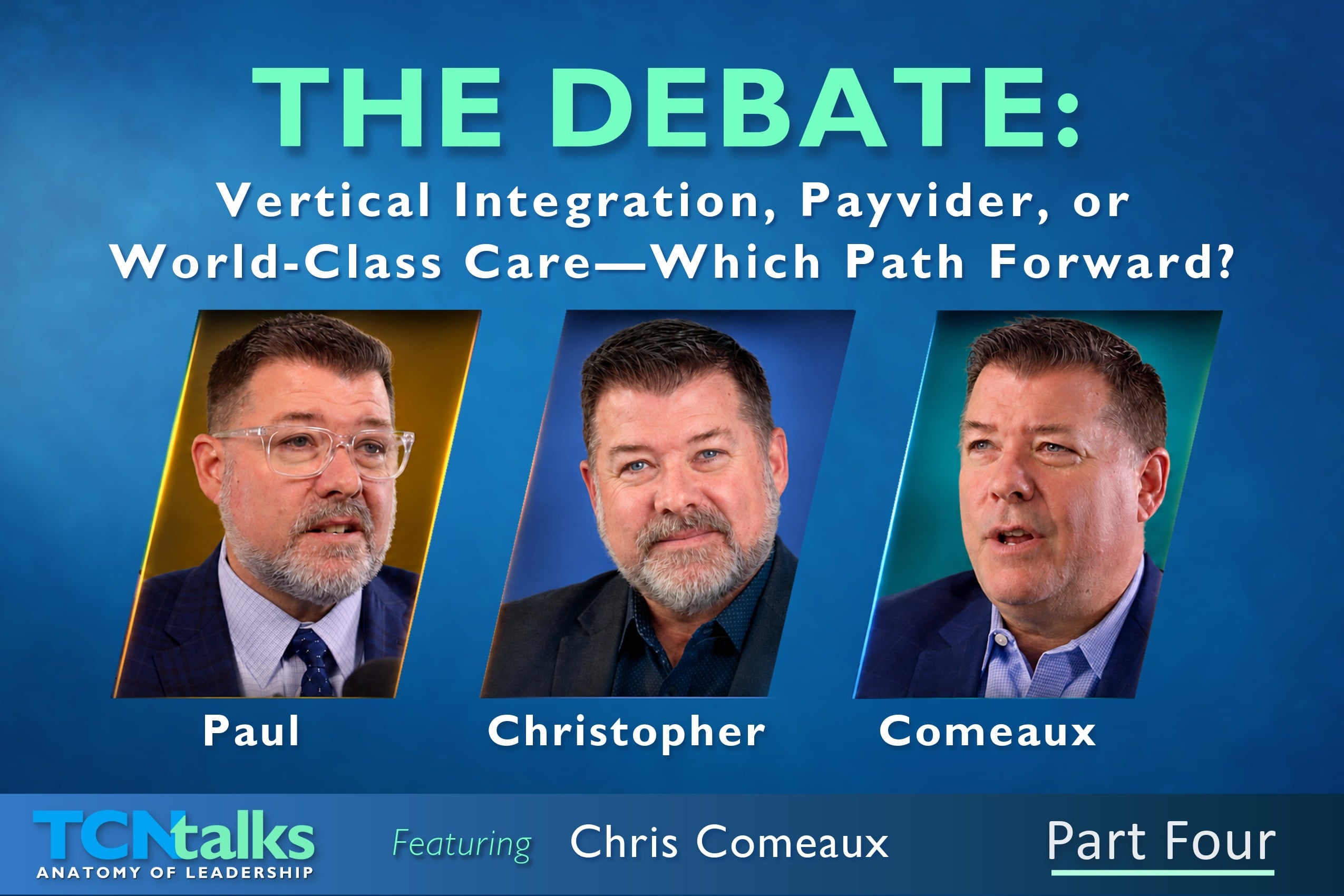
What happens when three compelling visions for healthcare’s future face off—and one host has to defend them all?
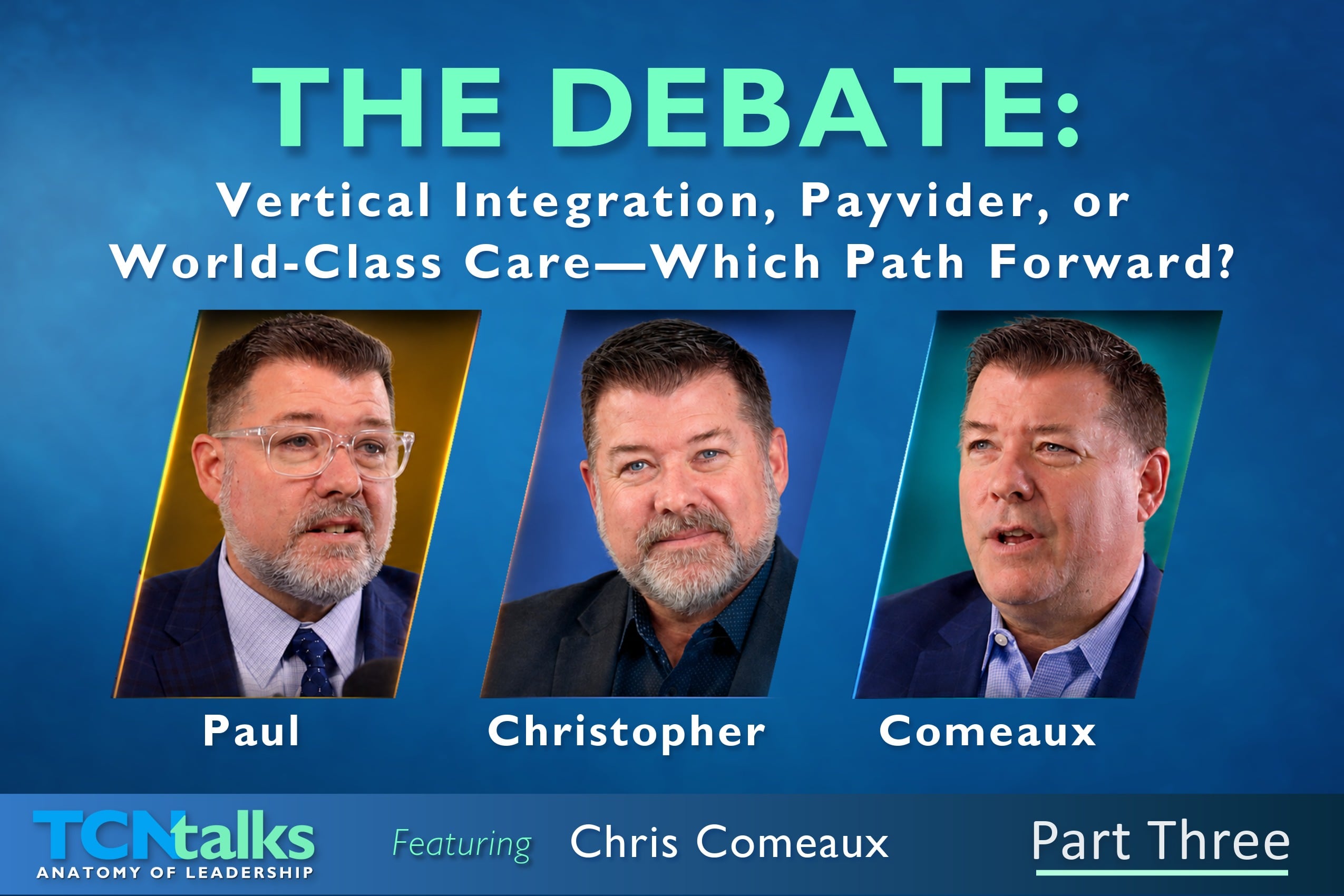
Who should control the healthcare dollar—and what happens when the organization paying for care also decides how it is delivered?

What if the most important care doesn’t happen in a hospital, hospice, or clinic—but in the moments in between?