
2 min read
The future of hospice won’t be defined by payment models alone—it will be shaped by leaders who know how to build the clinical capabilities, partnerships, and data infrastructure to thrive within them.
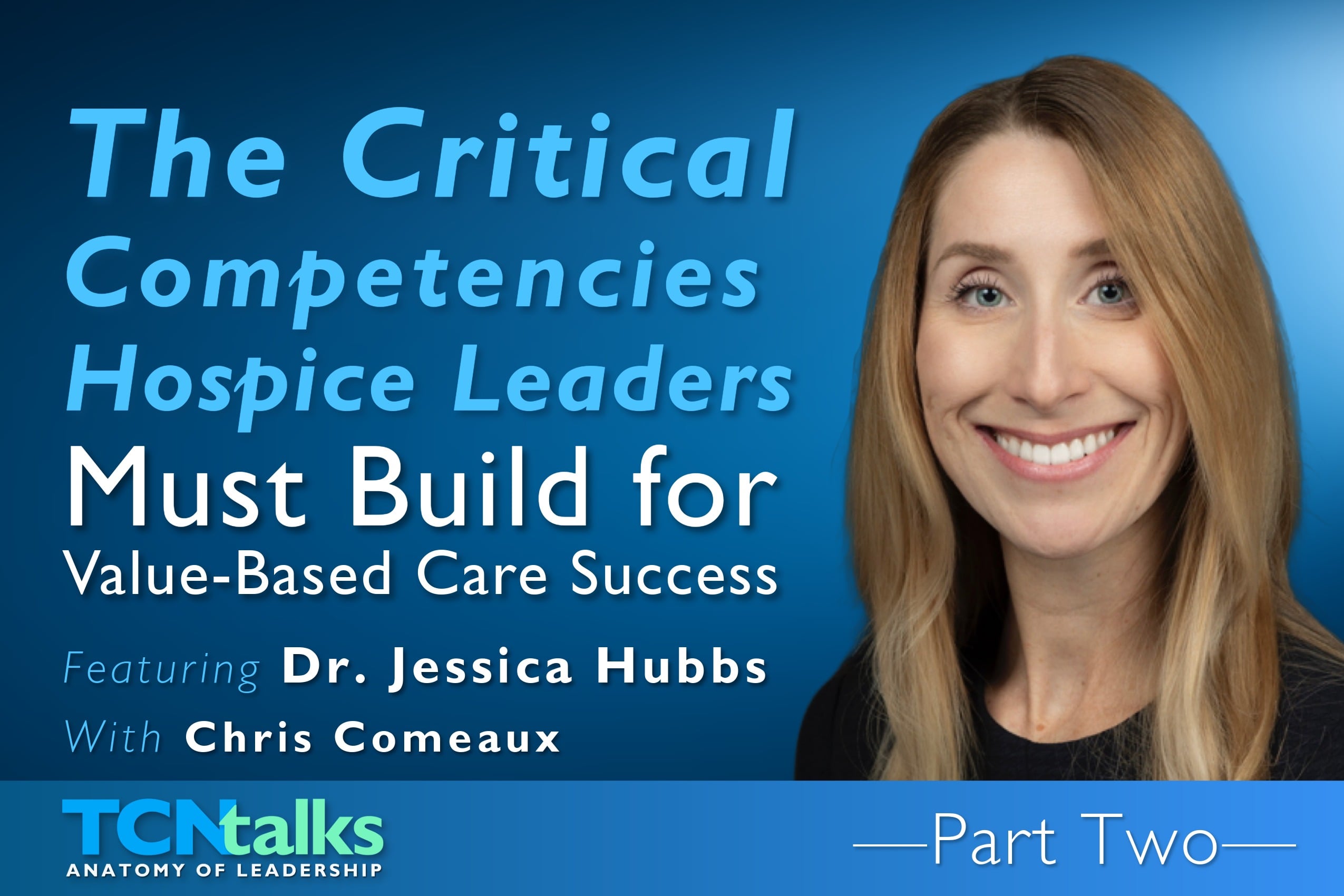
In Part Two, host Chris Comeaux continues his conversation with Dr. Jessica Hubbs, exploring what hospice and palliative care organizations must do now to prepare for a more integrated, value-based future. Dr. Hubbs makes the case that no organization needs to build every capability alone. Instead, leaders must understand their organization’s readiness, determine where strategic partnerships make sense, and consider how home-based primary care, palliative care, and hospice can work together as a more cohesive continuum of serious illness care.
The conversation also tackles some of the hardest questions facing the field: caring for high-need and medically complex populations, creating better models for patients with dementia, preserving what makes hospice uniquely valuable while expanding services upstream, and measuring success by outcomes that matter to patients—including quality of life and days at home. Ultimately, Dr. Hubbs identifies three critical investments for leaders: clinical infrastructure, data, and strategic partnerships—all anchored in a simple leadership principle: keep doing what is right for the patient.
5 Key Takeaways
- Build the clinical chassis for the future. Hospice organizations preparing for value-based care need clinical capabilities that can support patients across the continuum, integrating home-based primary care, palliative care, advance care planning, and hospice.
- Know what you should build—and what you should partner for. Leaders need an honest assessment of organizational readiness and should consider preferred partnerships when developing every capability internally isn't practical.
- Data must become a strategic competency. Understanding outcomes, length-of-stay patterns, patient populations, and opportunities for improvement can help organizations determine where and how to move services upstream.
- Complex patients need a more integrated continuum. Dementia illustrates why rigid time-based boundaries don't always align with patient needs. Dr. Hubbs challenges leaders to consider models that provide appropriate support earlier while remaining financially sustainable.
- Keep the patient—not the payment model—at the center. Amid reimbursement pressure and structural change, Dr. Hubbs argues that leaders should stay focused on doing right by patients, pursuing innovation, and leaning into integrated care.
The future of hospice is being built now. Listen to Part Two and consider where your organization stands today: Are you investing in the right clinical capabilities? Do you truly understand your data? Have you built the partnerships you'll need for what comes next?
Then share this episode with your leadership team, board, and colleagues across hospice and palliative care—and start the conversation about what your organization needs to build today to remain patient-centered and successful in tomorrow’s value-based environment. As Dr. Hubbs reminds us, the opportunity is not simply to react to change, but to lean into it while staying grounded in what matters most: doing right by the patient.
Our Special Guest

Dr. Jessica Hubbs
Internist and the Chief Clinical Officer at Advanced Care Innovations
Contact
Biography
Advanced Care Innovations
Our Host

Chris Comeaux
MLAS, CPA
President / CEO of Teleios
Order Book On Amazon
The Anatomy Of Leadership